Kapteyn & Groningen
The Kapteyn Astronomical Institute
The Kapteyn Astronomical Institute is one of the leading astronomy departments in Europe, with a rapidly growing focus on exoplanet and planetary science. With around 15 faculty members, 50 PhD students, and a strong cohort of postdocs, it covers research areas from cosmology and galaxy evolution to star and planet formation, exoplanet atmospheres and interiors, high-energy astrophysics, and advanced instrumentation and computational science. The institute is part of the Netherlands Research School for Astronomy (NOVA), which connects the astronomical institutes of Amsterdam, Groningen, Leiden, and Nijmegen into a national research network.
A growing hub for exoplanet science
Groningen is rapidly becoming a focal point for exoplanet and planetary science in the Netherlands. The Forming Worlds Lab works closely with the ExoAIM Lab led by Quentin Changeat, which specialises in atmospheric retrieval and characterisation of exoplanets using data from JWST, Ariel, and other facilities. Together, the two groups cover the full chain from planetary interior and climate modelling to atmospheric observations, creating a uniquely integrated research environment for students and postdocs working at the intersection of theory and data.
Kapteyn also has deep expertise in the physics and chemistry of planet formation. The group of Inga Kamp, director of the Kapteyn Institute and recipient of an ERC Advanced Grant, focuses on protoplanetary disc modelling and uses JWST to trace the building blocks of rocky planets. Floris van der Tak, professor of submillimetre astronomy and senior scientist at SRON, works on the interstellar medium, star formation, astrochemistry, and exoplanet habitability. These complementary groups make Groningen one of the few places where planet formation, atmospheric characterisation, and interior-climate modelling all come together under one roof.
National and international connections
Groningen hosts not only the Kapteyn Institute but also the low-energy astrophysics division of the Netherlands Institute for Space Research (SRON) and the NOVA sub-mm instrumentation lab, which builds cutting-edge receivers for telescopes like ALMA. The Netherlands Institute for Radio Astronomy (ASTRON), located nearby in Dwingeloo, is a close collaborator and a European leader in radio astronomy. Within the Faculty of Science and Engineering, there are strong interdisciplinary ties to physics, chemistry, and computational science. Across the Netherlands, Kapteyn researchers are active in the Dutch Origins Center, the Dutch Astrochemistry Network, the Netherlands Platform for Planetary Science, and the PRELIFE consortium.
The City of Groningen
Groningen is a vibrant, compact university city in the north of the Netherlands with around 230,000 residents, nearly a quarter of whom are students. That makes it the youngest city in the country and one of the youngest in Europe, with an energy and social scene to match.
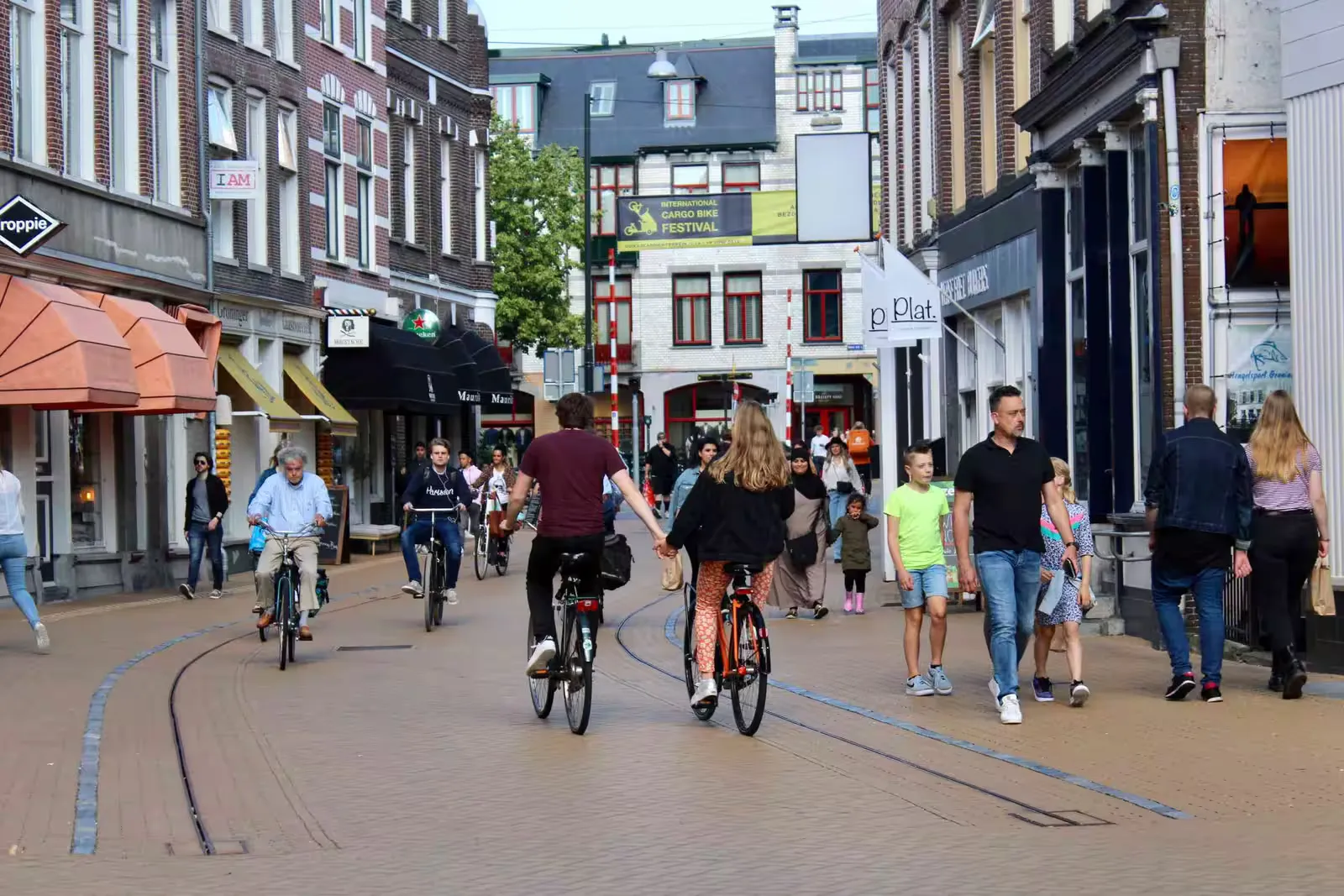
The city is famous for its cycling culture: over 60% of trips in the centre are made by bike, and the infrastructure is among the best in the world. The historic centre, anchored by the Martinitoren and the Grote Markt, is full of independent shops, cafes, and restaurants. Cultural life is rich, from the striking Forum Groningen (a cultural centre with cinema, exhibitions, and a rooftop terrace overlooking the city) to a thriving live music and festival scene. The surrounding province offers easy access to nature, including the UNESCO-listed Wadden Sea, national parks, and wide-open landscapes.
For international researchers, Groningen is practical and welcoming. English is widely spoken, the cost of living is moderate by Dutch and European standards, and the city is well connected by train to Amsterdam, the rest of the Netherlands, and neighbouring Germany. The University of Groningen provides relocation support, visa assistance, and help with housing for international staff and PhD candidates.
You can find more information on VisitGroningen, GroningenLife!, and the University of Groningen welcome page.
Groningen Impressions


